
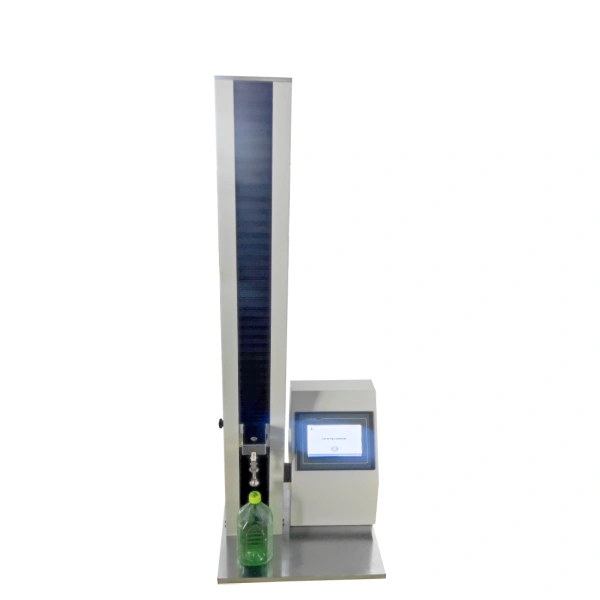
The Tester górnego obciążenia dla butelek PET jest niezbędnym urządzeniem stosowanym w przemyśle opakowaniowym do pomiaru wytrzymałości butelek PET na obciążenia pionowe. PET (politereftalan etylenu) jest szeroko stosowany w produkcji butelek na napoje, pojemników na żywność oraz innych opakowań z tworzyw sztucznych. Aby zapewnić zachowanie integralności strukturalnej butelek PET podczas transportu, przeładunku i przechowywania, kluczowe znaczenie ma ocena ich odporności na siły obciążenia górnego. W tym miejscu do akcji wkraczają maszyny do badania obciążenia górnego, oferujące precyzyjną metodę określania odporność na obciążenie od góry butelek PET, dbając o ich jakość i bezpieczeństwo. W niniejszym artykule omówimy znaczenie Testowanie pod obciążeniem górnym, jego związek z ASTM D2659, oraz w jaki sposób najwyższej klasy urządzenia do testowania obciążeniowego odgrywają kluczową rolę w zapewnianiu jakości.
ASTM D2659: Norma dotycząca właściwości kolumnowych butelek PET w zakresie zgniatania
ASTM D2659 jest standardową metodą badawczą stosowaną do oceny właściwości zgniatania kolumnowego wytwarzanych metodą rozdmuchową pojemników z tworzyw termoplastycznych, a konkretnie butelek PET. Badanie to pomaga producentom zrozumieć, jak ich butelki będą się zachowywać pod wpływem ściskania, co ma kluczowe znaczenie dla ustalenia, czy butelki są w stanie wytrzymać naciski zewnętrzne podczas przenoszenia, układania w stosy lub transportu.
Najważniejsze elementy normy ASTM D2659
The ASTM D2659 Metoda badawcza obejmuje następujące istotne elementy:
- Test zgniatania kolumny: Badanie to służy do określenia właściwości mechanicznych butelek z PET w warunkach zgniatania kolumnowego. Butelki poddaje się obciążeniu ściskającemu, a następnie mierzy się ich odporność na odkształcenie lub pęknięcie.
- Obciążenie zgniatające przy zniszczeniu: Jest to punkt, w którym butelka ulega uszkodzeniu z powodu nadmiernego obciążenia, co powoduje pęknięcie lub rozdzielenie się materiału.
- Obciążenie przy zniszczeniu: Obciążenie, przy którym butelka PET zaczyna ulegać odkształceniu plastycznemu bez odpowiedniego wzrostu obciążenia.
Pomiary te dostarczają danych niezbędnych do zapewnienia integralności strukturalnej butelek PET, zwłaszcza gdy są one narażone na działanie sił zewnętrznych, które mogłyby spowodować ich uszkodzenie.
Rola testów obciążeniowych od góry w kontroli jakości butelek PET
Testy obciążeniowe typu „top load” odgrywają istotną rolę w kontrola jakości poprzez ocenę odporności butelki na ściskanie bez ponoszenia uszkodzeń. Główną funkcją maszyna do testowania obciążenia górnego polega na symulacji rzeczywistych warunków, w których butelki są układane w stosy i narażone na działanie sił zewnętrznych.
Testowanie pod górnym obciążeniem mierzy odporność butelki na obciążenia pionowe poprzez wywieranie siły ściskającej wzdłuż górnej części pojemnika. Urządzenie rejestruje wartość siły, jaką butelka jest w stanie wytrzymać przed uszkodzeniem. Informacja ta ma kluczowe znaczenie dla zapewnienia, że butelka zachowa swój kształt oraz zapobiegnie wyciekom lub pęknięciom podczas transportu w ramach łańcucha dostaw.
Główne zalety Testowanie pod obciążeniem górnym obejmują:
- Zapewnienie integralności konstrukcyjnej: Butelki odporne na nacisk wywierany od góry są mniej podatne na uszkodzenia podczas przenoszenia i transportu.
- Zapobieganie uszkodzeniom produktów: Dzięki badaniu butelek pod kątem ich odporności na siły działające w płaszczyźnie pionowej producenci mogą zapobiec zanieczyszczeniu produktu spowodowanemu pęknięciem butelek.
- Zgodność z normami branżowymi: Przeprowadzanie prób obciążenia górnego zgodnie z normami takimi jak ASTM D2659 gwarantuje, że butelki spełniają wymogi prawne dotyczące bezpieczeństwa opakowań.
Jak działają najlepsze urządzenia do testowania obciążenia
The maszyna do testowania obciążenia górnego zazwyczaj składa się z następujących elementów:
- Płytka dociskowa: Podczas badania płyta wywiera obciążenie pionowe na górną część butelki.
- Czujnik wagowy: Czujnik siły mierzy wielkość siły wywieranej na butelkę, dostarczając dokładnych danych dotyczących jej odporności na obciążenia górne.
- Mechanizm regulacji wysokości: Dzięki temu osoba przeprowadzająca badanie może dostosować wysokość butelki, co pozwala na zachowanie spójności wyników badań i zapewnia równomierne rozłożenie obciążenia na całej górnej powierzchni.
- System rejestracji danych: Maszyna testowa rejestruje dane dotyczące siły, generując krzywe obciążenia i ugięcia, które są niezbędne do analizy właściwości butelki.
Procedura testowa:
- Umieść butelkę PET w uchwycie testowym, upewniając się, że jest wyśrodkowana i stabilna.
- Włącz system kompresji, który zacznie wywierać nacisk na górną część butelki.
- Maszyna kontynuuje przyłożenie obciążenia, dopóki butelka nie ulegnie uszkodzeniu lub odkształceniu, a odpowiedni obciążenie zgniatające oraz ugięcie są rejestrowane.
- Wyniki badań pomagają ustalić odporność na obciążenie od góry oraz czy butelka spełnia wymagane normy.
Znaczenie odporności na obciążenia pionowe w butelkach PET
The odporność na obciążenia pionowe Właściwe testowanie butelek PET ma kluczowe znaczenie dla zapewnienia ich wytrzymałości na ułożenie w stosy podczas transportu, przechowywania i przeładunku. Bez odpowiednich testów butelki mogą ulec uszkodzeniu pod wpływem nacisku, co może prowadzić do uszkodzenia produktu, utraty towaru oraz spadku zadowolenia klientów.
Testowanie pod górnym obciążeniem bezpośrednio ocenia odporność na obciążenia pionowe poprzez symulację warunków, w jakich butelki będą się znajdować w rzeczywistych sytuacjach. Ma to szczególne znaczenie w branżach takich jak produkcja napojów, pakowanie żywności i farmaceutyka, gdzie bezpieczeństwo i integralność produktu mają kluczowe znaczenie.
Testy obciążeniowe od góry w celu poprawy jakości butelek PET
The Tester górnego obciążenia dla butelek PET jest niezbędnym narzędziem dla producentów, którzy chcą zapewnić jakość i bezpieczeństwo swoich opakowań. Dzięki zastosowaniu maszyna do testowania obciążenia górnego, producenci mogą mierzyć odporność na obciążenia pionowe butelek PET oraz zapewnić, że ich produkty są w stanie wytrzymać działanie sił zewnętrznych. Przestrzegając ASTM D2659 Przestrzeganie norm podczas testów obciążenia górnego gwarantuje zgodność z wytycznymi branżowymi i pomaga zapobiegać uszkodzeniom produktów podczas transportu i przechowywania.
Aby uzyskać dokładne i wiarygodne Testowanie pod obciążeniem górnym, Urządzenia komórkowe oferuje zaawansowane rozwiązania testowe, które pomagają producentom utrzymać najwyższe standardy kontroli jakości. Nasze Tester górnego obciążenia Maszyny te zostały zaprojektowane tak, aby zapewniać precyzyjne pomiary, gwarantując, że Państwa butelki PET spełniają wymagania współczesnego przemysłu opakowaniowego.