
ASTM D2659 : Comprendre les essais de résistance aux charges verticales pour les récipients en thermoplastique
Le ASTM D2659 Cette norme définit une méthode d'essai essentielle pour évaluer la résistance aux charges verticales de récipients thermoplastiques moulés par soufflage, tels que bouteilles en PET et d'autres récipients thermoformés ou moulés. Cet essai, destiné à évaluer la capacité d'un récipient à résister aux forces d'écrasement, est essentiel pour les fabricants d'emballages afin de garantir que leurs produits conservent leur intégrité pendant le stockage, le transport et la manutention.
Comprendre le résistance à la charge verticale de la bouteille et le propriétés de compression des colonnes est indispensable pour les secteurs de l'emballage, de l'industrie pharmaceutique et de l'agroalimentaire, où l'intégrité des contenants est cruciale. Grâce à des méthodes telles que la test de charge supérieure, les fabricants peuvent évaluer la résistance des récipients sous pression et garantir leur fiabilité dans diverses conditions.
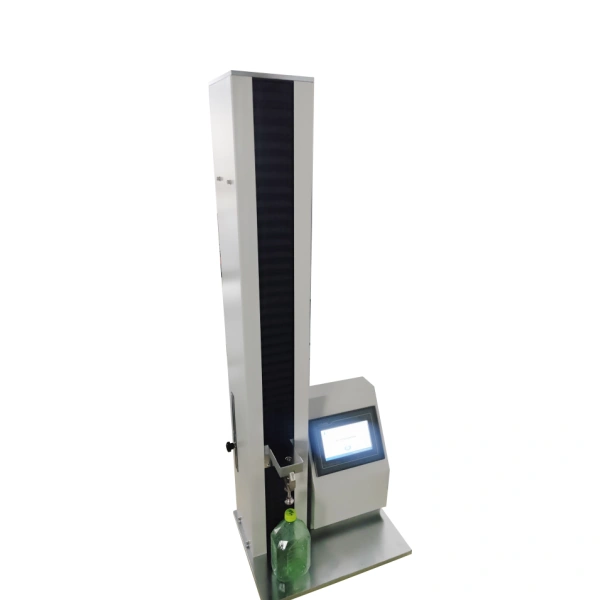
ASTM D2659 : Méthode d'essai standard pour la détermination des propriétés de résistance à l'écrasement en colonne
ASTM D2659 est la norme reconnue pour tester le résistance à l'écrasement de récipients thermoplastiques, par exemple bouteilles en PET. Ce test évalue les performances de ces conteneurs dans des conditions de contrainte de compression, qui reproduit les conditions auxquelles ils seront confrontés lors de la distribution et du stockage.
Ce test évalue plusieurs propriétés essentielles :
Limite d'élasticité à l'écrasement: La charge à partir de laquelle le conteneur commence à se déformer de manière irréversible.
Charge d'écrasement à la rupture: Le point à partir duquel le récipient cède complètement sous l'effet de la pression.
Déformation à la charge de limite d'écrasement: Degré de déformation du conteneur avant la rupture.
Rigidité apparente à l'écrasement: Le rapport entre la charge et la déformation dans la partie linéaire de la courbe.
Ces propriétés permettent aux fabricants de mieux comprendre les performances structurelles des conteneurs et d'optimiser leur conception afin d'éviter tout dommage lors de leur utilisation.
L'importance de la résistance aux charges verticales dans le domaine de l'emballage
Dans des secteurs tels que emballages alimentaires, produits pharmaceutiques, et boissons, les conteneurs doivent être suffisamment résistants pour supporter les pressions auxquelles ils sont soumis lors de la distribution et de la manutention. Le résistance à la charge verticale de la bouteille est un facteur déterminant pour sa capacité à supporter un poids sans s'effondrer ni se fissurer.
A essai de charge verticale sur des bouteilles en PET mesure la résistance aux forces de compression exercées par le haut. Cela permet de simuler des conditions réelles, telles que l'empilage de bouteilles dans des conteneurs d'expédition ou sur des rayonnages. Des conteneurs dont la résistance aux charges verticales est insuffisante peuvent entraîner des dommages importants aux produits, ce qui se traduit par des pertes pour les fabricants et les distributeurs.
En appliquant ASTM D2659, les fabricants peuvent évaluer et garantir la durabilité de leurs conteneurs, ce qui permet d'éviter des défaillances coûteuses des produits et l'insatisfaction des clients.
Essai de charge maximale : un élément clé pour garantir l'intégrité de l'emballage
Le test de charge supérieure est spécialement conçu pour mesurer le résistance à la compression des conteneurs d'emballage. Il simule la force exercée lorsqu'un objet est posé sur un autre, ce qui est essentiel pour les matériaux d'emballage destinés à être empilés pendant le transport.
Lors de cet essai, le récipient est placé entre deux plaques, et une pression croissante est appliquée jusqu’à ce qu’il commence à se déformer. Le moment où le récipient se déforme est enregistré, ce qui fournit des données précieuses sur sa résistance à la charge par le haut.
Ce test est couramment utilisé pour évaluer bouteilles en PET, récipients thermoplastiques, ainsi que d'autres matériaux d'emballage devant résister à l'empilement et à la pression exercée par celui-ci. Ces résultats aident les fabricants à choisir les matériaux adaptés et à définir les spécifications de conception nécessaires pour garantir que le conteneur puisse supporter les charges prévues sans défaillance.
Essais sur les récipients en thermoplastique : garantir la sécurité des produits
Récipients thermoplastiques, comme ceux fabriqués à partir de PET, PVC, et HDPE, sont largement utilisés dans le domaine de l'emballage en raison de leur durabilité, de leur souplesse et de leur capacité à résister à diverses conditions extérieures. ASTM D2659 s'applique spécifiquement à récipients thermoplastiques moulés par soufflage, qui sont couramment utilisés dans boisson et emballages alimentaires.
Le essai de compression sur colonne dans ASTM D2659 permet de mieux comprendre le comportement de ces conteneurs en situation de contrainte, mettant en évidence leur capacité à résister à l'écrasement et à la déformation. Cet essai peut s'avérer particulièrement crucial pour emballages alimentaires, où il est essentiel de préserver l'intégrité structurelle du conteneur pour éviter toute contamination et garantir la fraîcheur du produit.
En s'appuyant sur les résultats de essais de charge par le haut et essais de compression sur colonnes, les fabricants d'emballages peuvent optimiser la conception de leurs contenants, en s'assurant qu'ils respectent les exigences réglementaires et qu'ils offrent de bonnes performances tout au long de la chaîne d'approvisionnement.
Équipement recommandé pour les essais de charge maximale
À Cell Instruments, nous sommes spécialisés dans la fourniture de services de haute qualité appareils d'essai de charge par le haut pour évaluer la solidité et la résistance des matériaux d'emballage. Nos équipements permettent de s'assurer que les conteneurs tels que bouteilles en PET et récipients thermoplastiques sont soumis à des essais visant à évaluer leur capacité à résister aux charges verticales et aux forces de compression.
Notre Testeur de charge supérieure pour bouteilles PET est conçu pour répondre aux exigences de ASTM D2659, fournissant des données précises et fiables pour le contrôle qualité. Grâce à des systèmes de mesure de charge précis et à des vitesses d'essai réglables, nos appareils d'essai sont parfaits pour garantir la durabilité et les performances des emballages dans divers secteurs d'activité.
Conclusion
ASTM D2659 est une norme essentielle pour tester le résistance à la charge verticale des bouteilles et récipients thermoplastiques, en veillant à ce que les matériaux d'emballage puissent résister aux rigueurs du transport et de la manutention sans présenter de défaillance. Grâce à essais de charge par le haut, les fabricants peuvent mesurer la résistance à l'écrasement des emballages et garantir l'intégrité des produits, ce qui permet d'éviter des dommages coûteux lors de la distribution.
À Cell Instruments, nous proposons des services de premier ordre matériel de test pour aider les entreprises à optimiser leurs matériaux d'emballage, en veillant à ce que leurs produits respectent les normes du secteur et offrent des performances fiables dans des conditions réelles d'utilisation. Grâce à nos solutions d'essais de pointe, nous accompagnons des secteurs allant de l'agroalimentaire à l'industrie pharmaceutique, en améliorant le contrôle qualité et en renforçant la sécurité des produits.